
What is the Ideal TDS Level for Drinking Water? (Why Lower is Better)
Introduction
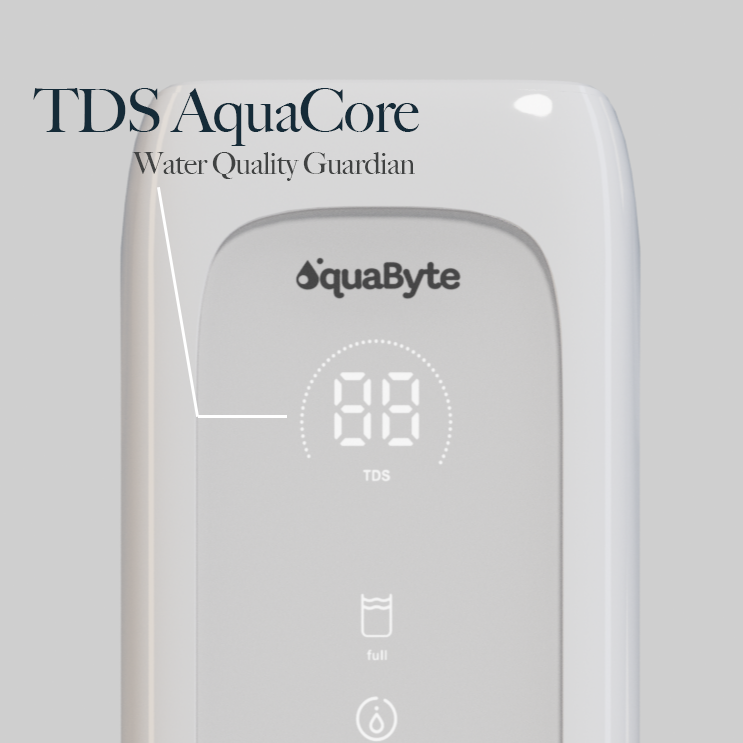
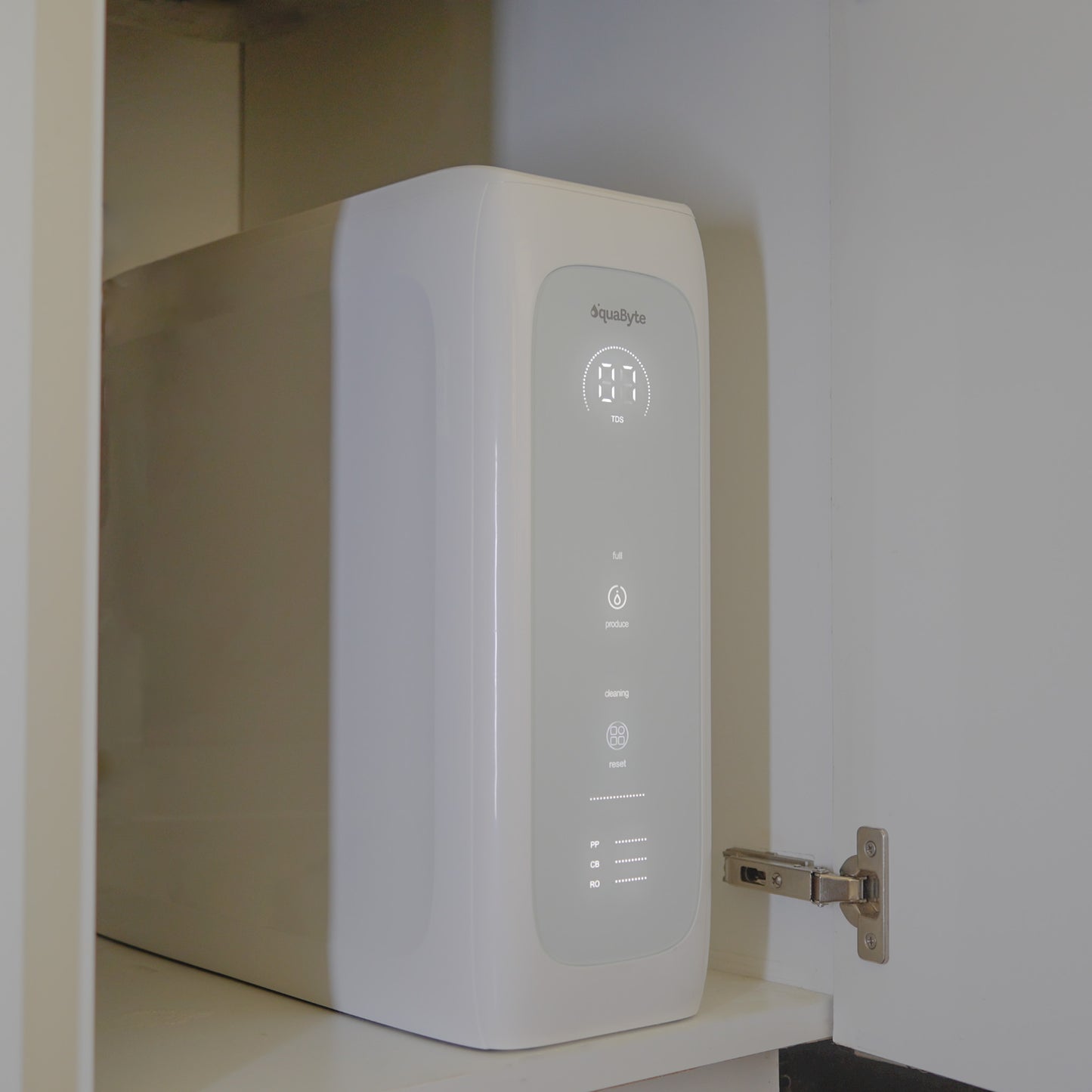
The "Number" on Your Meter You’ve just installed your high-end water purifier, filled a glass, and dipped your new digital tester into it. The number flashes: 8 PPM.
Panic sets in. You’ve read online forums claiming drinking water needs to be at 100, 200, or even 300 PPM to be "healthy." You worry that your water is "too clean."
At AquaByte, we are here to tell you: That low number is a victory, not a problem.
When your TDS (Total Dissolved Solids) drops below 10, it means your Reverse Osmosis (RO) system has successfully stripped the water down to its molecular foundation. It has removed the chaos of modern plumbing—the lead, the arsenic, the PFAs—and left you with exactly what you need: H₂O.
The Definitive TDS Safety Chart
|
TDS Level (ppm) |
Water Quality Status |
Verdict |
|
0 – 10 |
AquaByte Ultra-Pure |
Molecular Purity. Free from heavy metals, viruses, and industrial runoff. The cleanest hydration possible. |
|
10 – 50 |
High Purity |
Excellent. Typical of standard RO systems. Safe and crisp. |
|
50 – 150 |
Acceptable |
Average carbon-filtered water. Palatable, but retains some dissolved solids (good and bad). |
|
150 – 300 |
Tap Water |
Standard. Often carries a distinct "mineral" or metallic taste. |
|
300 – 500 |
Hard Water |
Poor. High scaling potential. Rough on appliances and kidneys over time. |
|
500+ |
Unsafe |
EPA Warning Limit. High risk of contamination. Do not drink without RO filtration. |
What is TDS, Really? (The "Trojan Horse" Problem)
TDS stands for Total Dissolved Solids. It is a measure of everything in your water that isn't water. This includes inorganic salts, organic matter, and heavy metals.
The problem with the "High TDS is Healthy" myth is that a TDS meter cannot tell the difference between "Good" solids and "Bad" solids.
Calcium(bad) raises your TDS.
Arsenic(bad) raises your TDS.
Pesticides(bad) raise your TDS.
If you aim for a higher TDS (say, 200 ppm) to get "minerals," you are forcing your filter to let other things pass through, too. You cannot selectively filter out microscopic poisons while keeping the minerals using a membrane. It’s an all-or-nothing game.
The AquaByte Difference: Why We Aim for <10 PPM
Most standard RO systems settle for 30–50 PPM. Aquabyte pushes the boundaries of filtration to achieve Ultra-Low TDS (<10 PPM).
Why do we go this low?
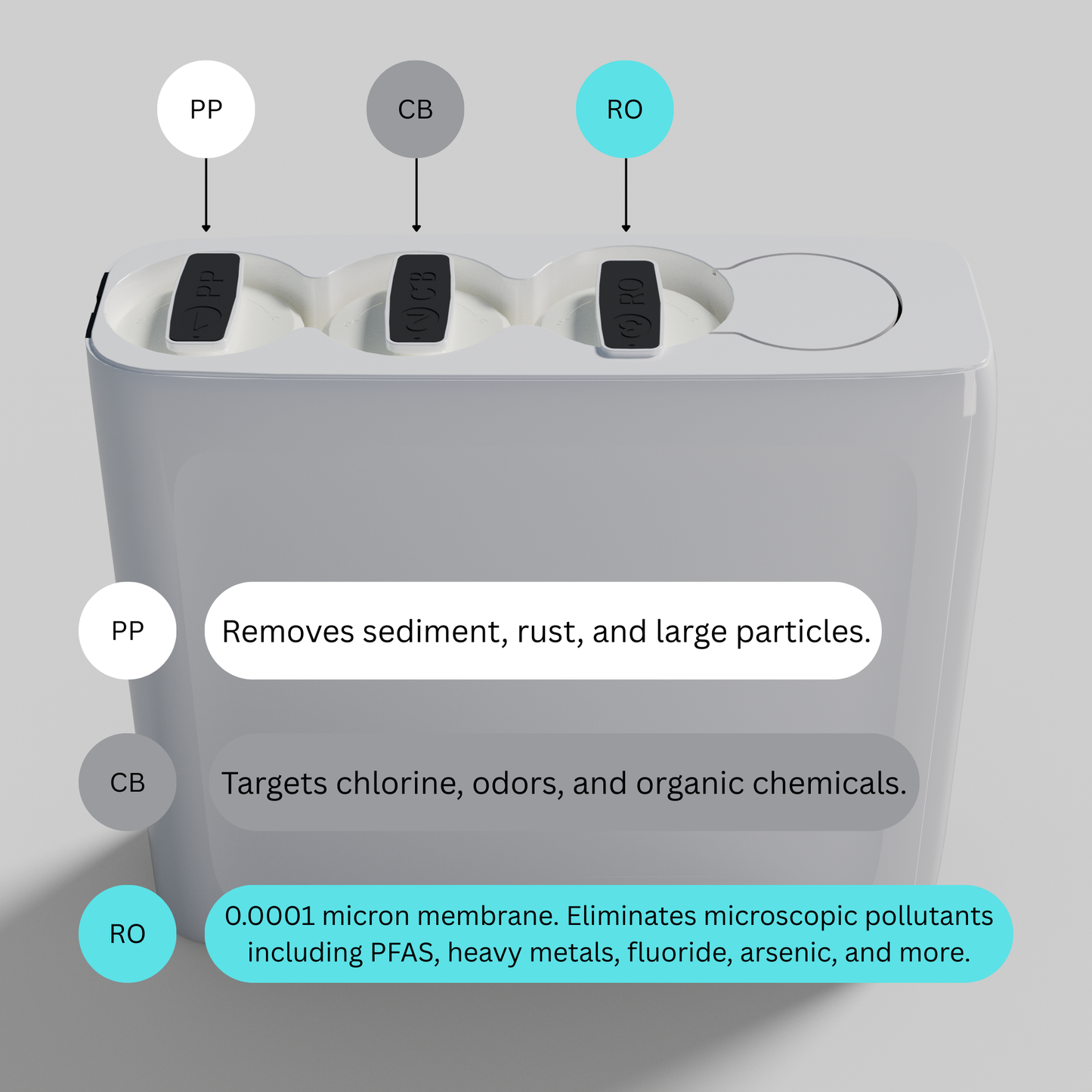
1. Molecular Precision At <10 PPM, we are approaching the theoretical limit of pure water. Our multi-stage filtration doesn't just "screen" the water; it forces it through a semi-permeable membrane with pores so small (0.0001 microns) that only pure water molecules can squeeze through. This is purification at the molecular level.
2. The "Clean Canvas" for Hydration Critics argue that <10 PPM water tastes "flat." We argue that it tastes clean. Taste in water usually comes from impurities—chlorine, iron rust from pipes, or sulfur. When you remove those, you are left with a smooth, light liquid that glides over the palate. This "hungry" water is an incredible solvent; it absorbs flavors from your coffee, tea, and cooking ingredients more efficiently than hard tap water ever could.
3. Maximum Safety Margin In an era of "Forever Chemicals" (PFAS) and microplastics, "good enough" filtration isn't enough. By targeting <10 PPM, we ensure that even the smallest, most stubborn contaminants have been rejected. We don't leave a "buffer zone" for toxins just to artificially inflate the mineral count.
Authority Check: What do the Experts Say?
Don't just take our word for it. The standards for water safety are clear on the dangers of high dissolved solids.
The EPA Standard: The U.S. Environmental Protection Agency (EPA) lists TDS as a "Secondary Contaminant." They recommend treatment when TDS exceeds 500 mg/L (ppm) due to hardness, deposits, and colored water issues.
Source: EPA Secondary Drinking Water Standards
The Bioavailability Fact: As noted in our previous article, the World Health Organization and medical studies confirm that the human body obtains the vast majority of its minerals from food, not water. Relying on "dirty" water for calcium is a poor health strategy compared to eating a single serving of yogurt or spinach.
Reference: PubMed: Contribution of Drinking Water to Mineral Nutrition
Conclusion
Stop obsessing over the number on the meter—unless that number is high. A reading of <10 TDS isn't an error; it's a badge of honor. It means your AquaByte system is delivering water in its most essential, uncorrupted form.
About the Author: AquaByte
AquaByte specializes in next-generation water purification technology. We engineer systems that refuse to compromise on purity. By targeting the molecular level of filtration, we provide families with water that is cleaner, safer, and lighter than anything else on the market. [Explore our Ultra-Pure Systems Here]